

The family of the 24-year-old young man, Ali Salimo, has not known about him for several months after he suddenly disappeared from his village in the countryside of Abu Rasin town, east of Sere Kaniye (Ras al-Ain), northeast Syria, about two years ago. Later, the family found out, through a civilian who was detained with him in prison and was released then, that he was in one of the detention centers of the Turkish-backed armed factions in the city of Sere Kaniye.
Syrian families living on the frontlines accuse the armed opposition factions of kidnapping their sons, following the military operation that Ankara called “Peace Spring,” against the cities of Sere Kaniye and Tel Abyad regions in October 2019.
Following the operation, the factions could reach the outskirts of the town of Abu Rasin, 30 kilometers from the city of Sere Kaniye and 75 kilometers from the city of Hasakah, from the east and south sides.
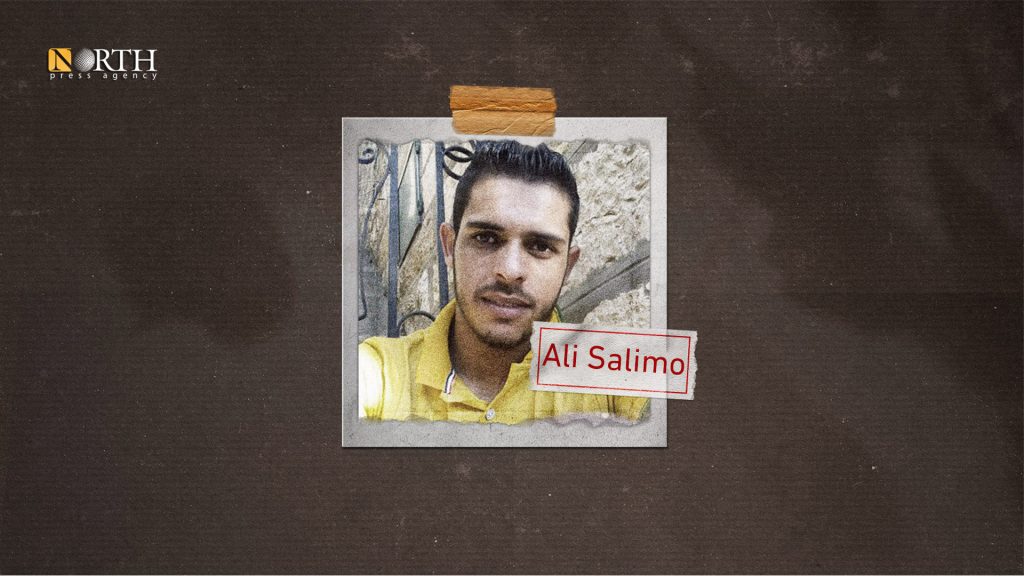
Salimo’s family, say the factions’ militants contacted them and asked for a $5,000-ransom in exchange for the release of their son. He has been arrested since October 27, 2019.
However, the same factions denied his presence with them, so his family no longer had any information about him.
The story of the young man started, when he was kidnapped by the cells of the factions, stationed on the outskirts of the town, on the pretext that he belonged to the Syrian Democratic Forces (SDF). The family, however, denies that their son involved in any military side.
The family now has no choice but to call on the humanitarian organizations to get their son out of the factions’ prison, especially since he was the only breadwinner for his wife and child, amid extremely difficult living conditions.
In addition to dozens of stories similar to Ali’s story, the Turkish operation displaced about 300,000 people, of whom about 175,000 people were displaced from the area between Sere Kaniye and Tel Abyad, in which the Turkish president claimed to establish a “safe zone”.
A recent report published by the Synergy Association for the Victims of the Turkish Invasion of Northeast Syria has indicated that less than 15% of Sere Kaniye residents returned to their homes after Turkey and its affiliated factions took control over the area.
The factions expanded in the eastern, western and southern countryside of Sere Kaniye, reaching the outskirts of Abu Rasin, Tel Tamr and the M4 highway.
The Synergy report says the region has witnessed 386 arrests, including 48 women and 12 children, in two years, and 152 people have been forcibly disappeared.
The prisons in Turkish-controlled areas are like a nightmare for the local population, as over two years, about 232 cases of torture have been recorded inside the prisons, resulting in the death of at least three people, it adds.
It is worth noting that young people are the most vulnerable to arrests, as they are either hidden or their families are asked for a ransom.
There are dozens of detainees, aged of 18 and 30 years old, from the villages of the town of Abu Rasin and the city of Sere Kaniye, according to residents, but the absence of official statistics makes it difficult to know the true numbers.
On January 13, an armed group calling itself the “Civil Police Intelligence” arrested a 26-year-old young man from his home in the eastern side of Sere Kaniye.
He was taken in front of his children, wife and parents on charges of being a member of the SDF, fighting Turkey and the factions.
The young man’s family says their son was put in a prison in Sere Kaniye, along with other young men from his own village, who were arrested at the same time and were accused of the same charges.
One of his relatives said the detainee was brought before the so-called “civil court” in several sessions and before civilian judges, to be later transferred to the military police to complete his trial on the pretext that he is a member of the SDF.
The military court sentenced him to a year in prison, of which he spent six months, according to the family.
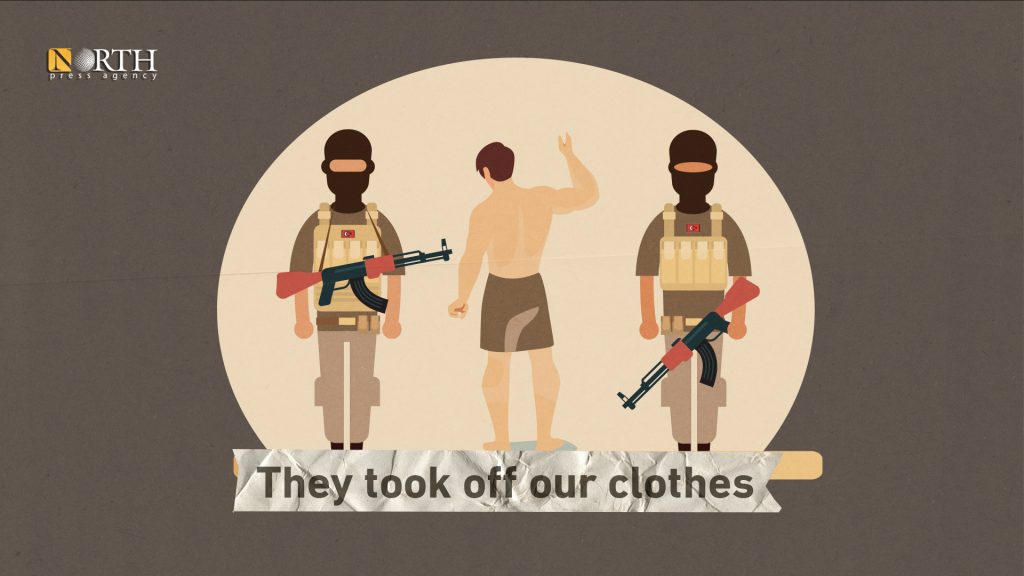
Civilians detained by the armed factions are subjected to the most severe forms of torture and humiliation, according to informed sources who spoke to North Press.
Taking money from the families of detainees under threat of death and abuse of detainees is one of the factors in the increase in arrests, especially among young people.
According to eyewitnesses in the eastern countryside of Sere Kaniye, the armed factions used to gather young men over the age of 18 in the squares and forcing them to take off their clothes to ensure if there were signs of carrying weapons on their shoulders in order to charge them.
Muhammad Khedr, one of the survivors of these arrests, said: “The armed men’s cars entered the villages in a barbaric manner, dragging young men from their homes and in front of their families’ eyes, and forcing them to run in front of the villagers, as they took off their clothes, to look for signs of fighting and weapons on their bodies.”
The young man said he was one of the detainees and that he was severely beaten on the face and body.
“I took off my clothes in front of everyone to look for any sign or injury indicating that I carried a weapon or participated with the SDF against them,” he added.
Khedr remained standing for hours with others in one of the squares until some of them were allowed to go home, after warning them not to leave homes or working without the permission of the factions.
He fired 50 bullets at him
In a murder described as “heinous,” a settler named Muhammad Ali Bashir killed a young man on June 8, 2020, southwest of Abu Rasin.
According to the young man’s relatives, Bashir fired more than 50 bullets from a Kalashnikov weapon at the young man while the latter was grazing his sheep near his village.
The killed was married and a father of five, and he did not belong to any military faction or a political party since the beginning of the Syrian crisis, according his relatives.
Following Turkey’s allowing the members of the armed factions to bring their families and relatives and housing them in the homes of civilians who were forcibly displaced from their homes, the killer came with his family to the eastern countryside of Abu Rasin.
The killer came with his family, accompanied by the armed factions, to the eastern countryside of the town of Abu Rasin, during the Turkish military operation.
Most families or civilians accompanying the armed factions and their leaders reinforce themselves with the factions’ support to commit violations against civilians or robbing them by creating arguments and accusations against the indigenous victims out of fear and displacement, according to residents and local reports.
After the start of the Turkish military operation immediately two years ago, Amnesty International collected evidence indicating that Turkish forces and allied armed factions “showed a shameful disregard for the civil life, and committed grave violations and war crimes, including willful killing and unlawful attacks that killed and injured civilians.”
Many international organizations have condemned the war crimes committed by the Turkish forces and the factions within the areas under their control in northeast Syria.
The most prominent war crimes that have topped the scene over the past two years is likely the Turkish forces’ transfer of dozens of people from Syria to its territory, which human rights reports said is a “blatant violation of the Fourth Geneva Convention.”
In February 2021, a report of the Human Rights Watch said “Turkey and the Syrian National Army have illegally arrested and transferred at least 63 Syrian citizens from northeast Syria to Turkey for trial on serious charges that may sentence them to prison for life.”
The organization also said on October 9, 2019, that Turkey and the affiliated opposition factions indiscriminately bombed civilian areas, carried out at least seven extrajudicial killings, and illegally seized private homes and shops of civilians and looted their property. They did not explain the enforced disappearance of aid workers while working in their areas.
“What is happening in the occupied areas of Sere Kaniye and Tel Abyad are crimes and violations of human rights (..) they are war crimes and crimes against humanity according to the rules of international human rights law,” Mustafa Oso, a member of the Justice Center for Human Rights in northeastern Syria, said.
He pointed out that this legal description of the crimes committed by the aforementioned sides in various regions of Syria, “was also adopted by the International Commission of Inquiry on Syria, Amnesty International, Human Rights Watch and others in their various reports on Syria and the situation of the human rights in it.”
“Hundreds of civilians detained by the armed factions are subjected to the most severe types of torture and humiliation for various reasons, including being members of SDF and for other reasons, the most important of which is taking money from the detainees’ families under the threat of killing and abuse of detainees,” Oso added.