
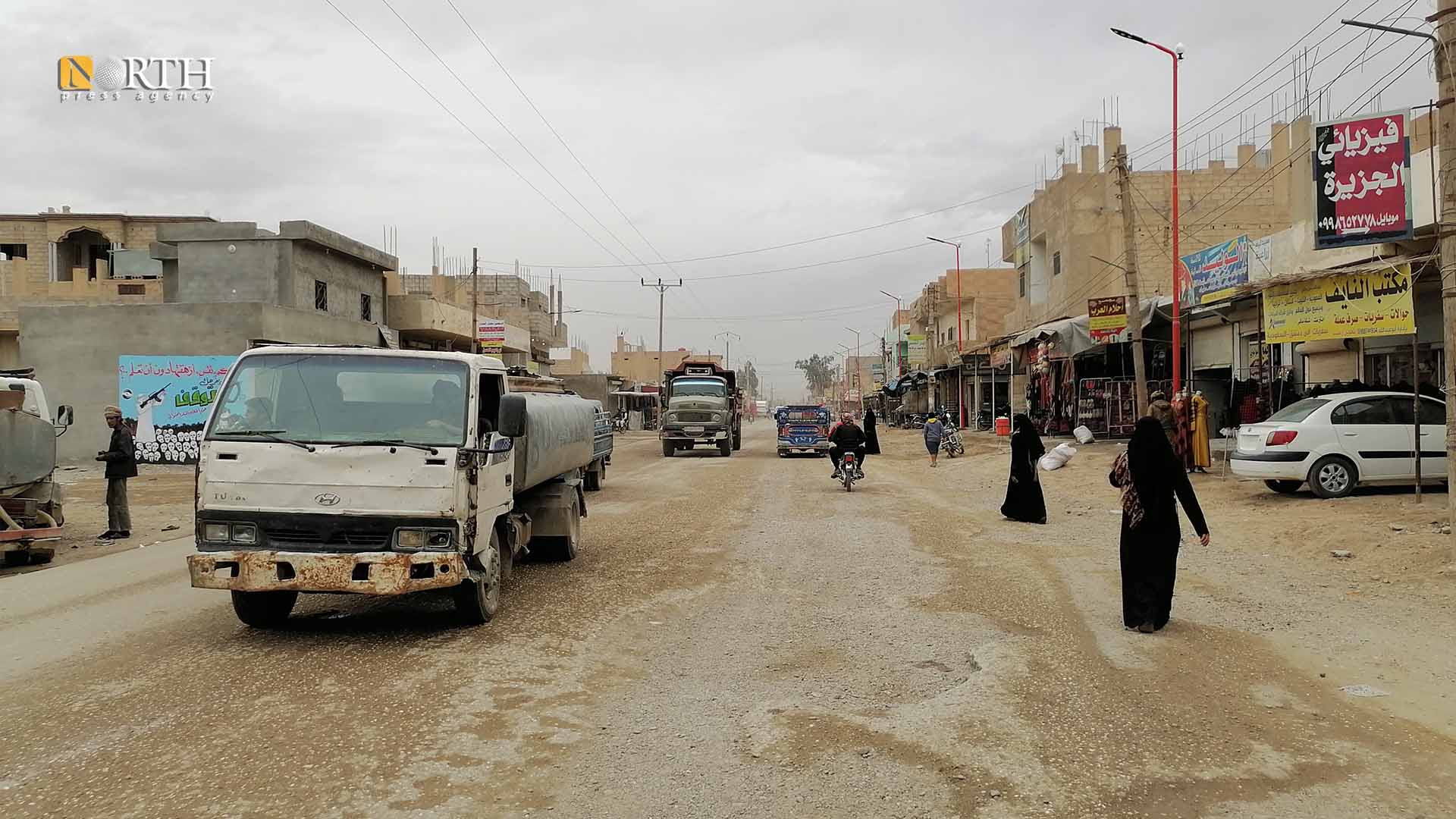
DEIR EZ-ZOR, Syria (North Press) – Saud Khalid (a pseudonym), a merchant in eastern Syria’s Deir ez-Zor countryside, still suffers from anxiety over being blackmailed over the phone, when unknown callers threatened to kill his family if he did not pay zakat (Islamic charity).
Less than a month ago, Khalid, a food store owner in the town of Abu Hamam, 85 km east of Deir ez-Zor, received a phone call from people claiming to be members of the Islamic State (ISIS), demanding that he pay them zakat.
Deir ez-Zor’s residents live under constant threat from ISIS, or those claiming to be affiliated with it, in order to collect money by imposing royalties on business owners and capital.
Khalid said that the caller spoke in a Tunisian dialect, confirming that he is one of the militants of ISIS.
They told Khalid that the next call would determine the time and place for paying the zakat, and that ISIS cells were imposing a specific tax on those who were well-off.
Death threats
“We have a great fear of ISIS due to what we faced during their ruling years; that’s why we don’t even dare to think about reporting them,” Khalid added.
“They determine the desert of the town as the place to deliver money, and asked me to put the money in a black bag and leave it there,” he said.
The caller warned Khalid not to tell the Syrian Democratic Forces (SDF) about the call and the money, and if he did so, the punishment would be the murder of his family, according to Khalid.
On September 8, SDF units arrested three people in the town of Thiban, 50 km east of Deir ez-Zor, on charges of blackmailing residents by imposing royalties and making death threats.
Invoice with an ISIS stamp
Muhammad Abdullah (a pseudonym), a shop owner in Abu Hamam town, said that the phenomenon is new in the town, although it previously existed in other areas in the eastern countryside, such as the towns of al-Shuhail, al-Busirah, and Thiban.
Via Whatsapp, unknown individuals asked him and other residents in the villages in the eastern countryside of Deir ez-Zor to pay large sums of money, ranging from $1,500 to $3,000.
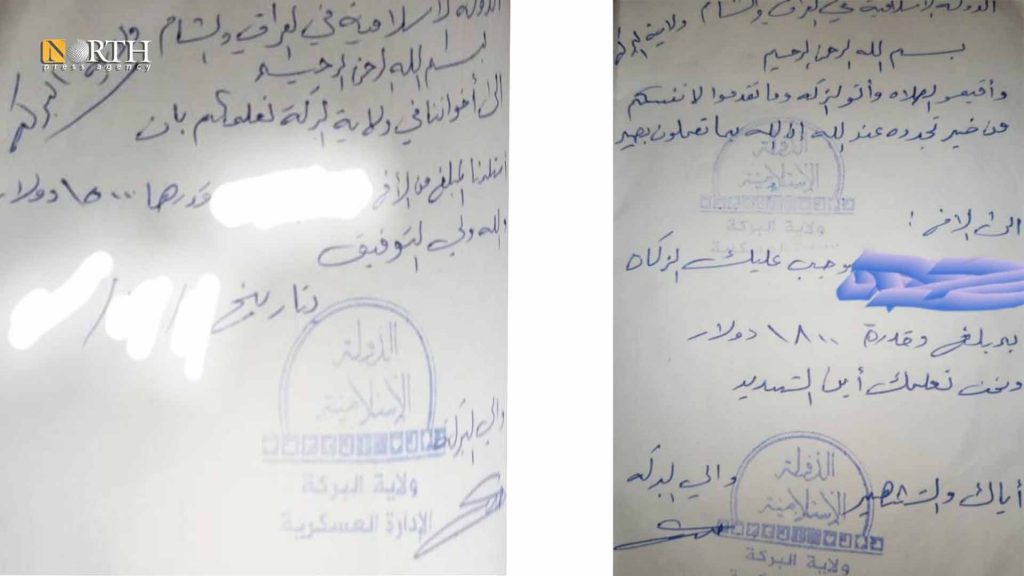
He said that he received photos of invoices with ISIS stamps on them, asking for zakat to be paid to them.
He pointed out that the receipt carries, in addition to the requested amount of money, a threat to kidnap and kill anyone who fails to pay or who reports them.
Deir ez-Zor countryside is characterized by a large geographical area in which ISIS sleeper cells are active. The most active area is that which extends from Jadeed Akidat (25 km east of Deir ez-Zor) to the city of Hajin (100 km east of Deir ez-Zor), according to military sources.
In early June, SDF arrested a sleeper cell which carried out kidnappings and blackmail under the name of paying zakat to ISIS in a raid in the town of Jadeed Akidat, east of Deir ez-Zor.
Ibrahim Jassem, the commander of Hajin Military Council in the eastern countryside of Deir ez-Zor, told North Press that 95% of these cases are committed by fraudsters playing on people’s fears of ISIS.
There are studies and plans to stop these groups, such as tracking phone calls and following up on cases of extortion with victims, in addition to eliminating remaining ISIS cells, he added.
Their activity targets capital owners, employees of Autonomous Administration institutions, and shop owners, according to Jassem. He pointed out that there are files of people working in this field in their possession, and “we have arrested some of them, and others are under surveillance.”