
Appeals to open investigation into death of man in Syria’s Hasakah prison
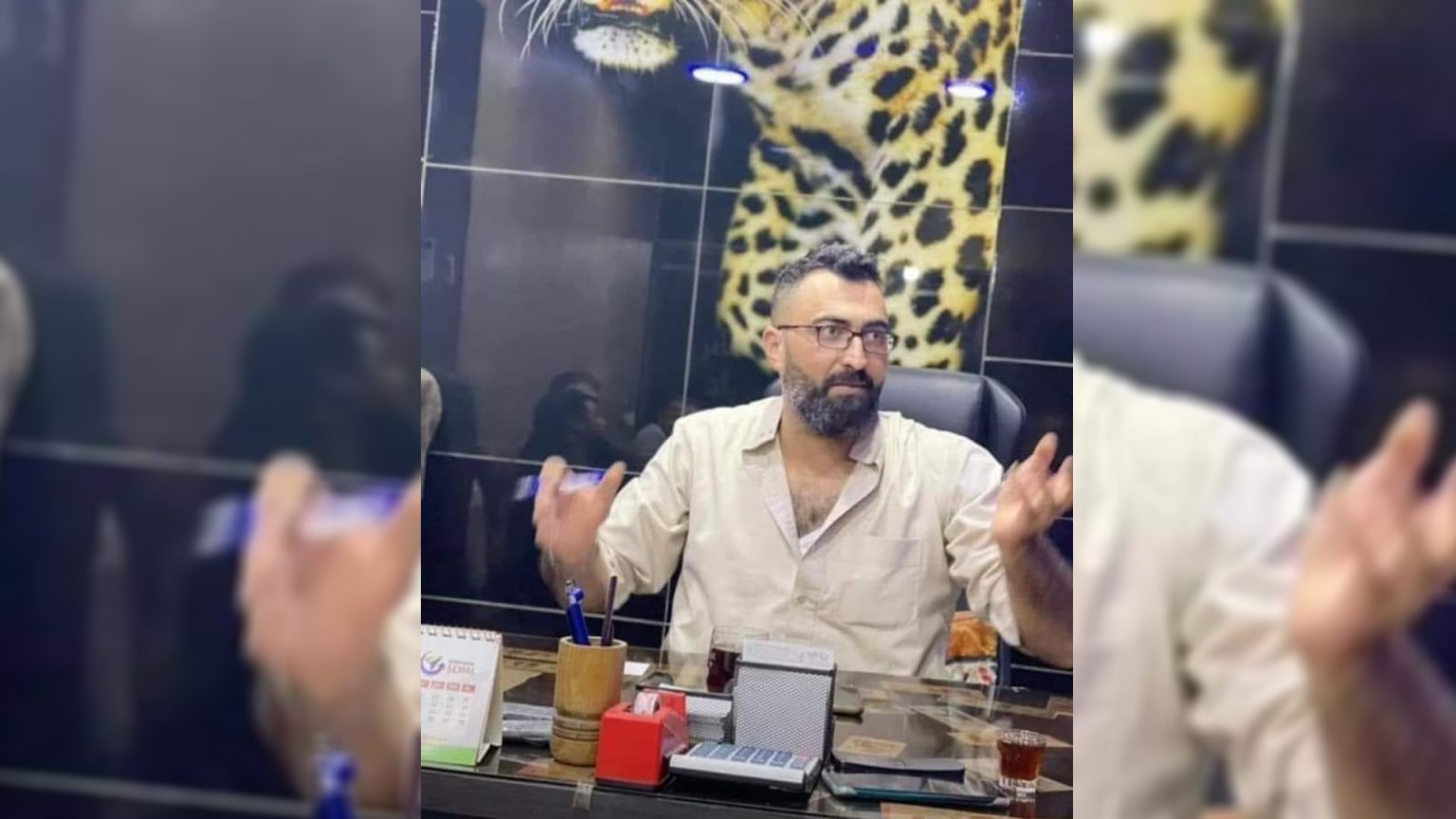
QAMISHLI, Syria (North Press) – On Wednesday, the family of the man who recently died in a prison in Hasakah, northeast Syria, appealed to the Syrian Democratic Forces’ (SDF) Commander-in-Chief and international organizations to open an investigation into an incident that the family claims caused the death of their son.
On Tuesday, social media websites were abuzz with news of the death of Amin Issa al-Ali, who is from the countryside of Derbasiya, after releasing pictures that they said were of the young man’s body showing signs of torture.
“On May 22, an Internal Security Forces (Asayish) patrol took my brother from his house in the city of Hasakah to Military Prosecution headquarters,” Dillawar Issa al-Ali, the deceased’s brother, told North Press.
“We did not receive any information about the place and the reason of the detention until an individual close to the Autonomous Administration of North and East Syria (AANES) in a hospital in Hasakah told us to go and receive the body,” al-Ali added.
He alleges that after more than a month, they received the body, which bore signs of torture, on Tuesday.
During a press conference in a hospital in Hasakah on Wednesday, Doctor Muhammad Sa’eed Shalash, a forensic medicine specialist, said, “We did not notice any sign of violence on the upper limbs of [al-Ali].”
“Asayish informed us that he was wanted as an eyewitness in a corruption case regarding employees in AANES’ institutions and that he would be released soon and no need to worry,” Joban Amin al-Ali, the deceased’s cousin, told North Press.
Days later, AANES security authorities delayed his release, “which caused us to worry about his fate, and we informed them that our son suffers from a thyroid problem and needs his medication.”
Dr. Muhammad Khalaf, a surgeon who witnessed the autopsy, said that the victim “was accompanied by” aspirin and the thyroid medication thyramazol.
The deceased’s cousin appealed to SDF Commander-in-Chief Mazloum Abdi to follow the issue and open an investigation in order to expose the circumstances and bring the perpetrators to justice.
“In light of the examination and the visible signs, we diagnose the deceased’s condition as having died of a stroke,” Shalash added in a press conference.
On Tuesday, the AANES’ Office of Justice and Reform Affairs said that the information circulating about a death in a prison in Hasakah of stroke has nothing to do with the truth, and the photos published were photoshopped images or images that were not the dead man’s body.
The media of AANES attached the statement with two documents signed by two doctors who examined the body.
The Office of Justice and Reform Affairs accused media channels of “incitement” against the AANES, and said that what they published was “shameless and unethical and against the task of media.”
Meanwhile, the family of Amin al-Ali released a statement in which they said, “We contacted many doctors in order to perform an autopsy and clarify the cause of death, but none accepted out of fear of the AANES’ authorities.”
“A forensic physician, who preferred to stay anonymous, prepared a medical report, in which he mentioned the torture signs.”
A doctor’s report published in the family’s statement mentioned “a fracture in the jaw, internal bleeding in the skull, traces of beating on the knee, blows with a sharp tool on the neck and the back of the head, and burning from the back of the head to the end of the spine with hot oil.”
Meanwhile, Shalash said that they did not notice any signs of burns on the body.
The family expressed their willingness to re-examine the body and exhume the grave again under the eyes of the media.
Additionally, the statement called on international human rights organizations for “opening a transparent, fair and independent international investigation to uncover the circumstances of this crime and bring the perpetrators to justice.”
The family of the victim “held AANES responsible for the incident since it is responsible for citizens’ safety and security in the entire area it runs,” according to the statement.
The Kurdish National Council (ENKS) released a statement on Wednesday condemning the incident, which they described as “heinous” and “contradicting all human values and human rights principles.”
Through the statement, ENKS called for opening an investigation by an international and impartial committee, including doctors and jurists, to uncover the truth.
The statement called on SDF to assume their responsibilities and pledge to “pursuit those who seek to damage the Kurdish ties and the intra-Kurdish talks,”
They also called on the American guarantor of the talks to use pressure in order to “reveal the truth and announce it to the public.”