
24-hour clinic fights coronavirus in Syria’s Hasakah
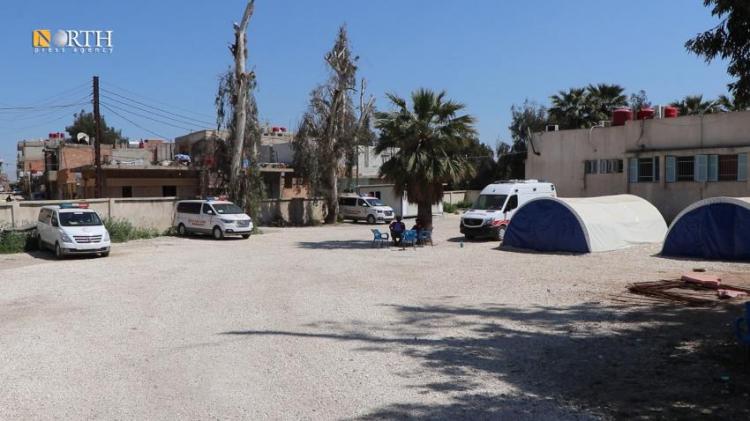
HASAKAH, Syria (North Press) – Kallasah dispensary, in northern Syria’s Hasakah, has been receiving dozens of patients, including suspected cases of coronavirus 24 hours a day and provides many services to people.
Mizgin Barakat, director of the health clinic, said, “This health center provides several services to the people, including gynecology, pediatrics, and internal diseases.” She added that the center also provides free medicines and medical check-ups, with services provided in cooperation with the Doctors of the World (MDM) organization and the Health Board of the Autonomous Administration in North and East Syria (AANES).
Coronavirus
During coronavirus, says Barakat, the facility has had to take extra precautions; staff do not see patients without face masks, and the temperature of all patients are taken before they enter.
She explained that “the patient enters the isolation unit according to their signs and symptoms. The isolation unit includes a blood pressure device and a thermometer, in addition to a special bed for the patient.”
If no symptoms of the virus are evident, she adds, the patient will enter the waiting room leaving a one-meter distance between themselves and other patients.
She also stressed the importance of abiding by total lockdown decisions issued by the administration, such as those implemented in the cities of Raqqa, Qamishli, and Hasakah on Tuesday. “The lockdown is so important for the people to abide by, it limits the outbreak of the virus. It is better for the people to seriously abide by the one or two weeks of lockdown.”
Suspected cases
Bassam al-Hussein, a general doctor at the dispensary, said, “We receive many cases of disease, but our focus now is to sort and isolate coronavirus patients, since the epidemic is widespread in northeastern Syria and throughout the world. Cases that go through the dispensary are few, but there are many suspected cases.”
Al-Hussein added that if a case is suspected, the patient is prevented from mixing with others and vital signs are from the patient. New strains of coronavirus, he adds, may exhibit uncommon symptoms, such as “severe diarrhea in young people and chest complaints in adults.”
After the suspected case is put into quarantine, “the Kurdish Red Crescent is contacted, and a swab is taken by them as they continue treatment with them,” al-Hussein explained.
When asked about the effectiveness of the lockdowns issued recently in the northeast, al-Hussein stated, “It would be desirable if it was earlier; the benefit would be greater, and when the lockdown is stronger and more precise, the infected cases will be smaller, because the large number of cases is difficult to control and our work becomes more difficult.”