
Turkey issues arrest warrants against pro-Kurdish politicians including opposition mayor
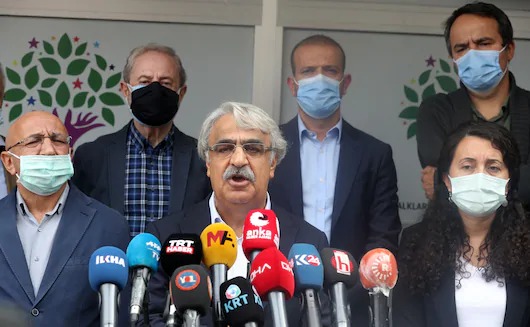
ISTANBUL, Turkey (North Press) – Turkish authorities said they have issued arrest warrants against 82 people on Friday, including current and former officials of pro-Kurdish Peoples’ Democratic Party (HDP), on charges of riots in Turkey in 2014 over ISIS attacks on Syria’s northern Kurdish majority town of Kobani.
During the protests, in dozens of cities and towns across Turkey, demonstrators had called for Turkey to allow military assistance to Kurdish fighters in Kobane which was besieged by ISIS at the time, at least 37 people in Turkey were killed during the riots, authorities said.
The town of Kobani, on the Syrian-Turkish border, turned into a symbol of the war against ISIS and the beginning of the partnership between the People’s Protection Units (YPG) and the US-led global coalition, which developed later after the formation of the Syrian Democratic Forces (SDF).
The prosecutor’s statement Friday said the arrests were being ordered “regarding the calls for protests” at the time by the Kurdistan Workers’ Party (PKK), a banned militant group in Turkey, as well as HDP, the pro-Kurdish opposition party, which is legal. Turkish authorities have accused the HDP of supporting violent acts by the insurgent PKK, a charge the party denies.
The arrest warrants included prominent HDP figures, including Sire Surya Onder, Nazmi Gur, Ayla Akat Ata, Altan Tan, and Amin Aina, according to the Mezopotamia News Agency in Turkey.
An arrest warrant was issued against Ayhan Bilgin, a prominent mayor from Kars in eastern Turkey and one of the few HDP mayors who has managed to retain his position during the purge, at least two of the party’s former members of parliament were also arrested, according to local media reports.
The prosecutor’s statement did not explain why six years have passed between the alleged crimes and the arrest warrants.
The government has pursued a crackdown on the HDP, which promotes greater cultural rights and autonomy for Turkey’s Kurds.
Dozens of elected mayors from the HDP have been removed from their offices over the past few years and replaced with government-appointed trustees.
The investigation conducted by Prosecutor’s Office mentioned the name of the former leader of the party, Salahuddin Demirtas, who has been imprisoned since 2016 in Turkey and awaiting trial in several cases.
Many journalists, parliamentarians and human rights defenders have been imprisoned, including the Turkish presidential candidate for the opposition, Salahuddin Demirtas, according to the United Nations World Report 2018.
In an interview with The Washington Post in June, Bilgen said he and other remaining HDP mayors were facing intensifying pressure from authorities and government-friendly media outlets and that they expected to be arrested at any moment.
“We joke with another, wondering whose turn is next,” he said.
Gursel Tekin, a lawmaker with the Republican People’s Party, or CHP, called the arrest orders “political” in a Twitter post. “Trying to criminalize the HDP and the democratic political space is a great disservice to Turkey,” he added.
It also marked a milestone in Turkey’s deteriorating relationship with the country’s Kurdish movement.
The government of President Recep Tayyip Erdogan, which had been pursuing peace talks with the PKK, angered Kurds by refusing to allow fighters or weapons across its border to aid Kurdish fighters in Kobane.
65 candidates for the HDP won the mayoralty in 2019 elections, then 47 of them were arrested under the pretext of “supporting terrorism” and replaced by unelected officials.
As tens of thousands of Kurdish refugees from Syria streamed across the frontier, the protests over three days in early October 2014 shocked Turkey, leaving nearly 800 people injured as vehicles and shops were set ablaze in Kurdish-majority cities.
The government justified its actions in part by saying that providing military aid to Syrian Kurdish fighters affiliated with the PKK amounted to supporting terrorists.
Ankara relented in late October under intense international pressure and allowed Iraqi Kurdish fighters aligned with Turkey to assist in the defense of Kobane.
The Turkish authorities launched an arrest campaign since 2016, which ended with about 80,000 people in prison awaiting trial, and the suspension of 150,000 employees and soldiers from work, according to reports.