
The Israeli gas agreement with Greece and Cyprus is uncompleted without Italy
Ramallah – North-Press Agency
Ahmed Ismail
The agreement that Israel signed on Friday with Greece and Cyprus to transfer natural gas into the European continent still bears many questions that need answers, most notably: What does this agreement mean and in what context does it fit?
The official Israeli radio Makan indicated that the agreement includes a clause obliging the three countries to protect the gas pipeline that will be extended for this purpose, which calls for security coordination between these countries.
The Arab-Israeli journalist, Nazir Mejali, sees that there is an exaggeration from the government of Netanyahu regarding the description, "the military alliance between the three countries.” Mejali explained in an interview with North-Press that the economic aspect of the gas agreement must be differentiated from the military and strategic aspects, as he believes that the economic aspect of the agreement still has question marks, although Netanyahu pressured and went to sign the agreement on an internal electoral issue in Israel and as a "demonstration attempt" to respond to the Turkish-Libyan agreement to share the economic maritime borders between them.
He noted that this Turkish-Libyan agreement deals with a straight and continuous maritime line in the Mediterranean Sea between Libya and Turkey and penetrates what is described as the economic maritime of Greece.
In fact, Mejali is referring to a remarkable partiality of the Greek agreement signed by Israel about a week ago, namely that Italy was supposed to be present in this agreement, but it did not, and without it the agreement is invaluable.
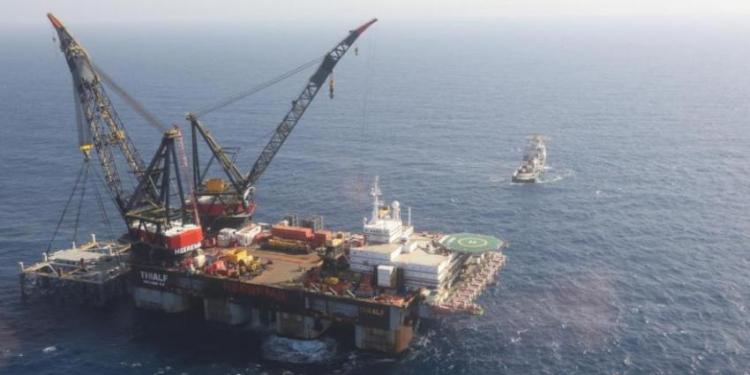
Mejali explained that the gas pipeline starts from the Israeli field of Leviathan in the eastern Mediterranean to Cyprus and Greece, and it is supposed to be pursued to Italy, where the gas would be distributed from Italy into Europe.
Regarding why Italy did not attend this agreement, Mejali said that “it is not ready first, secondly it does not want to get into contact with Turkey, in addition that Italy has told Israel that the urgency of the matter does not help and it is just symbolic, and without Italy the agreement is useless.” He showed that the key part in the agreement signed by Israel with the help of Greece and Cyprus, is that this alliance that Netanyahu is trying to build is to be against Turkey and its alliances, and therefore it is the essential part of the agreement. “To what extent will this alliance have a military force that threatens or is affected by Turkey?" Mejali wondered.
He answered: "The question of the military alliance between Israel, Cyprus and Greece remains limited, but the real aim is intended to threaten Turkey.”
Mejali recalled that Turkey's relations with its neighbors are bad, despite what the Turkish President Erdogan said when he won the presidential elections for the first time, stating that "he wants to build distinguished relations with neighboring countries," but this was not achieved at all. It seems that Israel has tried to invest this factor towards forming an anti-Turkish force, but so far, Israel’s efforts on this level have shown limited impact.
Mejali stressed that the issue of the war between Turkey and Greece is not easy, neither for Greece nor for Turkey, which means that Greece will not enter a war against Turkey. Anyway, the agreement of Greece and what constitutes a moral alliance remains a matter that lays down certain foundations in the region, which means that not only for Cyprus and Greece.
In the context of what has come to be known as "gas wars and alliances in the Eastern Mediterranean", Mejali mentioned the Palestinian gas in Gaza Strip; however, “it is controlled by Israel and prevents Palestinians from investing in it.”
In this context, Palestinian Prime Minister Mohammad Shtayyeh revealed more than a month ago the names of the regional states in addition to Cyprus, fighting over "the gas in Gaza Sea.”
Experts affirm that the Mediterranean is a gas sea more than just gas wells. This means that all the Mediterranean countries have significant gas reserves.
Nazir Mejali said that the Mediterranean gas was first discovered in the Palestinian waters, then confiscated by Israel, and prevented the Palestinian Authority from investing it. After that a series of gas discoveries began in the Eastern Mediterranean.
It is worth mentioning that there is a dispute between Lebanon and Israel over one of the gas points in the economic waters of the Mediterranean. The dispute revolves around how economic waters are calculated between the two countries. Thus, there is a raging gas war in the region, but Mejali believes that solutions must eventually be found. “We're talking about a 10-kilometer walk from the beach, which means a wide area of gas," ha said.
There are two ways to calculate the zoning areas for economic maritime in the world, but also there are compromises, as it is easy to prevent gas wars.