
Turkey parliament passes law for PKK disbandment, reintegration
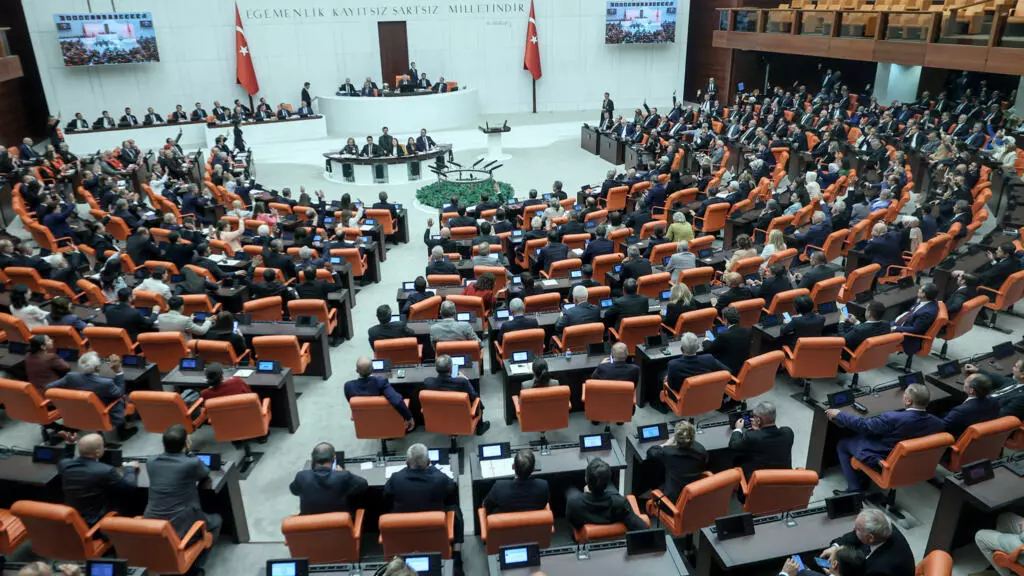
QAMISHLI, Syria (North Press) – Turkey’s parliament on Monday approved legislation establishing a legal framework for the disbandment of the Kurdistan Workers’ Party (PKK), a key step in Ankara’s efforts to end a decades-old conflict that has killed tens of thousands.
The bill was approved by 468 lawmakers in the 600-seat parliament, with support from President Recep Tayyip Erdogan’s ruling Justice and Development Party (AKP), its nationalist ally the Nationalist Movement Party (MHP), and the pro-Kurdish Peoples’ Equality and Democracy (DEM) Party.
The legislation provides legal protections for former PKK members who have not committed specified crimes and allows the suspension of some prison sentences related to PKK membership. It also creates a framework for the return and reintegration of former members into society.
The law addresses a central issue in the peace process: the legal status of thousands of PKK members as the group dismantles its organizational and military structures.
The measure follows a renewed peace initiative launched after jailed PKK leader Abdullah Ocalan called on the group on Feb. 27, 2025, to lay down its arms and dissolve. The PKK subsequently declared a ceasefire and announced its dissolution in May 2025. In July, 30 PKK fighters symbolically burned their weapons near Sulaymaniyah in Iraq’s Kurdistan Region.
The PKK later withdrew its fighters from Turkish territory, describing the move as part of the process’s second phase. Turkey’s parliament also established a cross-party committee to oversee legal and political measures related to the initiative.
The legislation comes amid disagreements over the scope of the process. The PKK has criticized the framework for focusing primarily on disarmament while failing to comprehensively address the Kurdish issue. It has called for guarantees concerning Ocalan’s role and the ability of former fighters to participate in democratic politics without prosecution over their previous affiliation.
The law does not resolve broader Kurdish demands, including expanded political and cultural rights, changes to anti-terrorism legislation, or Ocalan’s status after more than two decades in prison.
Ankara has framed the initiative as part of its goal of creating a “terror-free Turkey,” while Kurdish politicians have argued that lasting peace requires broader democratic and legal reforms.
The PKK-Turkey conflict began in 1984 and has claimed tens of thousands of lives. A previous peace process launched in 2013 collapsed in 2015 after renewed fighting.