

DEIR EZ-ZOR, Syria (North Press) – Amid leaking tents and freezing winter conditions, Umm Mohammed sits with her six children, holding onto memories of the home she left years ago and dreaming of the day she can return. The fall of the Assad regime in December 2024 raised hopes of a return to normal life after years of war that claimed hundreds of thousands of lives and displaced millions. But for Umm Mohammed and tens of thousands of displaced Syrians in Deir ez-Zor and across the country, the reality has been far more complicated.
“I live here with my six children. After everything we went through, we hoped to return to our homes after the liberation, but honestly, we found nothing that encourages us to go back. The security situation is still marked by assassinations, thefts, and violations. These camps are not a place fit for living,” she told North Press.
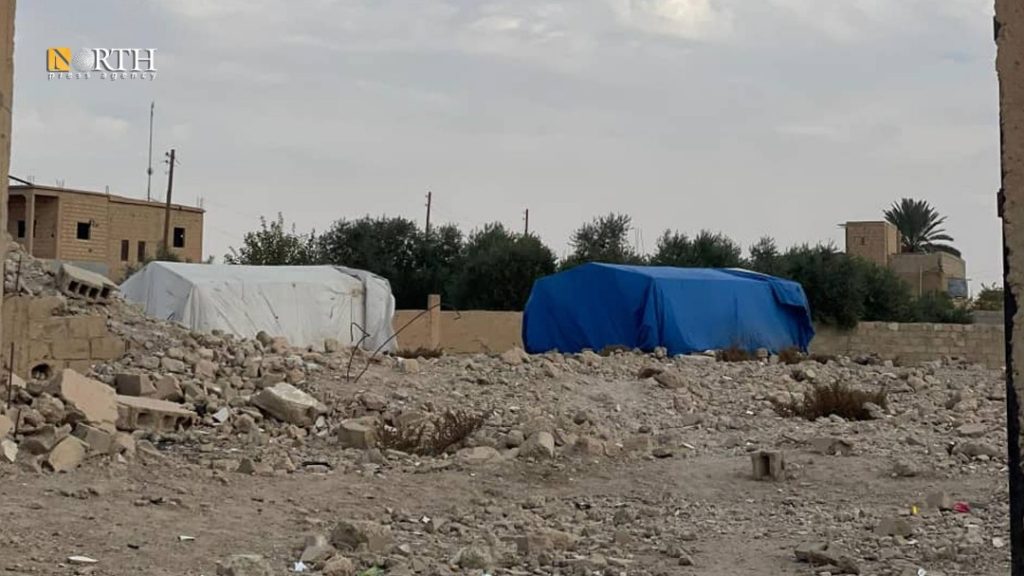
Conditions in the Muhaymida Camp, west of Deir ez-Zor, are severe. Umm Mohammed said, “There are no basic services, no electricity, no clean water. We live in tents that leak whenever it rains. Since the beginning of winter, the cold has become unbearable. Sometimes I feel like I am deprived of even the minimum level of dignity.”
Nayef al-Abed, originally from Abu Kamal in the Deir ez-Zor countryside, fled his town nearly five years ago due to regime and Iranian-backed militia violence. “We were civilians working in trade. But because of the chaos and thefts, we were forced to seek refuge in the city of Hajin,” he said. Even after returning to Abu Kamal following the regime’s fall, Nayef found insecurity and daily thefts persisted. “I prefer to stay in the camp until the security and economic conditions improve. We don’t care who rules; we care about safety and a dignified, free life.”
Security incidents continue to plague the region. Last week, two members of the Syrian Ministry of Defense were killed by a landmine in the Deir ez-Zor desert, and ISIS claimed responsibility for a previous attack on an oil tanker.
Activist Abdulrazzaq al-Aref told North Press that insecurity and economic instability are major obstacles to returning home. “Many families have lost everything and have no idea how to start over. Most camps also lack healthcare and education, so many prefer staying in the camps rather than returning to unsafe areas,” he explained.
Humanitarian specialist Ahmad al-Obeid highlighted the health and psychological toll on displaced families. “Many suffer illnesses caused by poor living conditions and lack of healthcare. Psychological pressures from displacement and war also severely impact their mental well-being. There is an urgent need for psychological and social support programs, but current resources are far from sufficient.”
Reports indicate that hundreds of families in Deir ez-Zor camps live in tents or makeshift shelters with minimal access to clean water, electricity, healthcare, and education. Many must purchase water from private suppliers due to damaged or nonfunctional networks, adding to financial strain. With winter intensifying, the lack of heating worsens living conditions, increasing health risks for children and women.
The destruction of infrastructure across Deir ez-Zor further complicates returns, making reconstruction essential for displaced families to rebuild their lives. United Nations reports emphasize that thousands of displaced and uprooted individuals urgently require shelter, healthcare, clean water, education, and psychosocial support to cope with the trauma caused by war and displacement.
For Umm Mohammed, Nayef, and countless others, the hope of returning home safely and living with dignity remains a distant, yet pressing, necessity.
Reporting by Omar Abdurrahman