
Iran accuses U.S. and Israel of destabilizing Syria amid escalated clashes
DAMASCUS, Syria (North Press) – The Iranian Foreign Ministry on Saturday accused the United States and Israel of orchestrating instability in northwest Syria, as military clashes intensify in the region. Tehran reiterated its support for the Syrian government, emphasizing the importance of regional cooperation to counter “dangerous plots.”
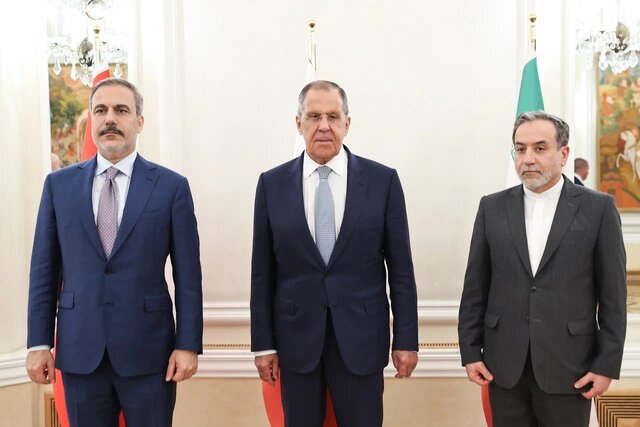
The accusations were made during a phone conversation between Iranian Foreign Minister Abbas Araghchi and his Russian counterpart Sergey Lavrov. The two diplomats discussed recent developments in Syria, including intensified clashes between the Hayat Tahrir al-Sham (HTS) militant group, formerly known as Jabhat al-Nusra, and Turkish-backed opposition factions.
Since Wednesday, these groups have launched a military campaign called “Deterring Aggression,” gaining control of significant territories in southern and eastern Aleppo countryside, as well as parts of Idlib and northern Hama countryside.
International Reaction and Accusations
Araghchi called on the international community to “fulfill its responsibilities in combating terrorism,” asserting that the recent movements of armed groups in Syria are part of “a project by the Zionist entity and the United States to destabilize West Asia.” He further urged closer coordination among Iran, Russia, and other regional states to thwart what he described as “dangerous conspiracies.”
The Russian Foreign Ministry has yet to officially comment on the conversation, though Moscow has consistently backed Damascus in its efforts to reclaim control over rebel-held areas.
Meanwhile, Turkey’s Foreign Ministry issued a statement late Saturday confirming a separate phone call between Turkish Foreign Minister Hakan Fidan and Sergey Lavrov. The discussion reportedly focused on the current situation in Syria and the Astana peace agreements, which aim to find a political resolution to the Syrian crisis.
A Fragile Peace Shattered
The resurgence of violence in northwest Syria threatens to undermine fragile ceasefire agreements brokered in March 2020 by Russia and Turkey. These agreements have occasionally held back full-scale military offensives but have failed to address the underlying political deadlock.
Analysts suggest that the renewed hostilities highlight deeper geopolitical tensions in the region. Tehran and Moscow, both staunch allies of the Syrian government, have been wary of Ankara’s increasing military and political influence in northern Syria. At the same time, the U.S. and its Western allies remain critical of Iranian and Russian interventions.
Humanitarian Concerns
The latest clashes have exacerbated the already dire humanitarian situation. Over 4 million civilians in northwest Syria, many of them internally displaced, are at risk of further displacement as violence escalates. Aid organizations are warning of potential shortages in food, medicine, and shelter as winter approaches.
With the region’s future uncertain, international stakeholders continue to grapple with how to bring stability to Syria, a conflict-ridden country that has endured over a decade of war.