
Government-run hospital in Syria’s Qamishli receives medical supplies
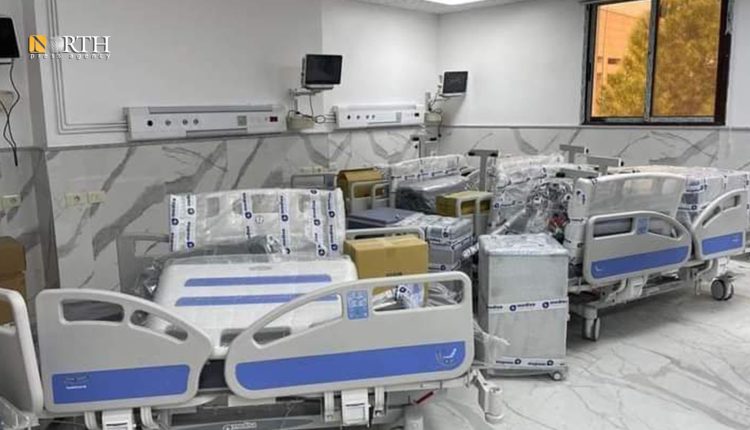
QAMISHLI, Syria (North Press) – Several medical devices and supplies arrived on Wednesday at the Syrian government-run National Hospital in the city of Qamishli, northeastern Syria, amid skepticism from residents that they will be hidden by the hospital’s administration.
Medical source at the National Hospital in Qamishli, who decided to stay anonymous for security reasons, told North Press that medical devices and equipment for ICU arrived at the hospital, while the administration decided to put them into service later.
On Feb. 28, Syria’s Ministry of Health received huge medical aid and equipment provided by the United Arab Emirates (UAE) via the port and International Airport of Latakia Governorate, western Syria.
Among the medical devices are a computed tomography (CT) scanner, a color Doppler echocardiography machine, and several other devices worth $250,000, according to the source.
The source also mentioned that the hospital director, Omar al-Akoub, prohibits any media outlet from reporting without his written approval.
Aid and equipment worth millions of dollars occasionally reach the National Hospital in Qamishli, but they quickly disappear, according to the source, leaving the hospital’s services limited to simple matters.
One resident of Qamishli, who visits the hospital in cases of illness, told North Press that “the service at the hospital is very poor, but we are forced to go there because it is free, and we do not have the money to go to private hospitals.”
They always hear about the arrival of massive aid and medical devices to the hospital, but they do not see any, the resident added.
The source stated that al-Akoub controls the internal and external affairs of the hospital and is supported by influential officers and officials in the government.
The resident also complained about patrols by members of the Military Security Branch affiliated with the government forces at the hospital gate, monitoring the movement of visitors and pursuing wanted individuals seeking treatment.
The branch’s members take royalties from patients for not checking their names, as a result, the residents are left with the choice between paying or the risk of being arrested, the source further added.